
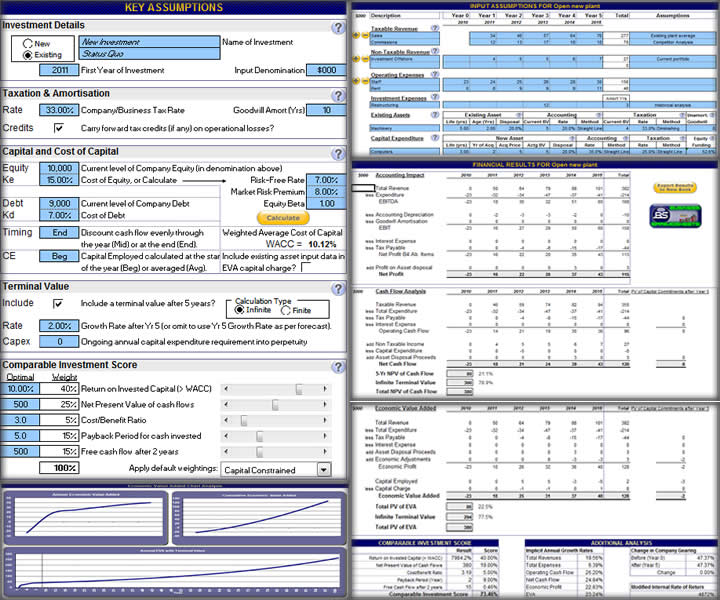
 Evaluating the business performance is one of the pivotal management tasks as it identifies the potential business problems and alarms the positive and negative signs of business performance. Business owners and managers will have the credible information through the evaluation process to rectify the problem areas of business and plan future business activities for successful growth of the business.
When evaluating the business performance, it is important to understand how the business operates along with its own key drivers of business performance. When you evaluate the business performance, it is highly recommended to use the most recent financial data including recent financial reports and Business Activity Statements lodged to ATO. If you have highly reliable business software, you can easily extract the information required for the evaluation. More frequent evaluation is required if the business is undertaking a project to improve the financial health and overall business performance to guide the project under control. By doing so, business owners and managers will become more proactive in their business decision making processes with well defined road ahead.
Business evaluation is not necessarily limited to financial performance of the business, rather, it is highly recommended to undertake non-financial performance evaluation as this eventually impacts business financially. The non-financial key drivers could be the lead time for certain business processes or employee absenteeism rates during particular period of time. You need to develop your own key performance indicators (KPIs) to measure the performance drivers and compare with them with others such as industry benchmark figures.
Business evaluation involves business assessments from various information sources in order to identify the true pictures of the business operations and the key drivers of the business. Collecting information from interviews, physical observation, policies and procedures and financial record is essential part of this assessment stage.
Information Analysis
Once you obtained all the relevant information regarding business operations and the key business drivers, then a review of the information should be conducted to analyse below:
- The past three years of financial statements
- Documented policies on key operational areas such as pricing, buying, inventory management, internal control, supply chain management, staffing etc.
- The value stream map
- Employee job descriptions
- Compliance documents and any agreement signed for contract entered for the business.
- Industry information. This is particularly important as the business need to be compared with industry benchmark. The information can be both financial and non-financial. This comparison will provide measurable information in the same industry
Developing an Evaluation Model and Measures
With the information collected and analysed in previous step, then this information should be compared with current financial and non-financial information of the business to see the trends of the business performance which is very helpful for planning the future progress of the business. The five key areas below is the most important indicators of business success.
- Profitability
- Cashflow, liquidity and solvency
- Efficiency
- Business planning, both financial and operational
- External issues and trends
Although each of these areas are interlinked each other, it is preferred to separate each area so that the each part can be analysed and clarified before looking at any casual relationships within the outcomes.
Profitability Check
The success of any business comes with profitability, and this is the managers’ the most important task. A profitable business should ensure the business operations are in line with the overall business strategy.
Measuring business profitability can be done by applying the information to various financial ratios specified below.
| Measurement | Formula | Description |
| Gross Profit Margin | Gross Profit / Net Sales * 100 | The percentage of sales dollars remaining to pay overhead expenses after deducting cost of sales (Cost of Goods Sold). This analysis will assist you assessing the efficiency of pricing, stock purchasing procedures and handling as well managed stocks |
| Mark-Up | Gross Profit / Cost of Sales * 100 | The percentage difference between the actual cost and the selling price. It is to ensure the business sells the products covering all the costs incurred with the sales |
| EBIT Margin | Net profit before interest and tax / Net Sales * 100 | EBIT stands for Earnings Before Interest and Tax, and this measure can be useful when comparing against industry benchmark figures. Interest and tax are excluded when comparing against benchmark as each business has different figures regardless of their business performance. |
| Net Profit Margin | Net Profit / Total Income * 100 | Unlike EBIT margin, net profit margin includes interest and tax. This is useful figure when comparing with different periods within the business. |
| Break-Even Analysis | Overhead Expenses / 1- (cost of goods sold ÷ net sales) | This figure tells you that how many sales much sales dollars achieved before all the expenses are covered and actual profit begins and useful to set sales targets for the business or for sales employees. |
Table 1. Profitability Measures
Cashflow and Liquidity Check
A business must have enough cash to run the business, particularly to pay the bills coming in everyday and the debts the business may already have. A lot of businesses went out of business due to liquidity problem, and this could be a legal issue for company directors in relation to insolvency trading. Cashflow, liquidity and solvency must be regularly monitored for this reason.
| Measurement | Formula | Description |
| Cashflow Forecast | N/A | This provides information on future cash resources and how the cash will be applied to the business. This is integral part of business planning that indicates additional funding requirements in advance so the business owners and managers can be prepared. |
| Working Capital to total sales | Total current assets less total current liabilities / Total sales | This figure indicates how much working capital per dollar of sales the business should be maintaining. The right percentage of the working capital per sales dollars vary business by business depending on the item price and inventory turnover level |
| Current Ratio | Total Current Assets / Total Current Liabilities | This measures whether the business hold enough current assets to meet the debts level with a margin of safety, and the acceptable ratio is 2:1 generally though it varies depends on the industry. |
| Quick (acid) Ratio | Total current assets less inventory / Total current liabilities less bank overdraft | This is the best measure for liquidity. As it excludes inventory from the calculation, it shows the real liquid assets of the business. |
| Leverage (gearing) Ratio | Total Liabilities / Total Equity * 100 | This ratio shows the level of debt financing against equity to fund the assets of the business. Generally, the higher the ratio, the more difficult to get further finance. |
| Debt to Asset Ratio | Total Liabilities / Total Assets * 100 | The portion of assets being financed by liabilities. Generally, the ratio should be below 1. |
Table 2. Cashflow & Liquidity Measures
Efficiency Check
A business must ensure that it is efficiently utilising and controlling its assets and liabilities. The measures can be used for this purpose.
| Measurement |
Formula | Description |
| Inventory Turnover | Cost of Good Sold / Average stock held for the period | This indicates the number of times the stock in the business has turned over, and the lower the rate, the longer the stock is taking to turn over. This brings issues about aged and / or over (excess) stock holdings for the business resulting liquidity issue. |
| Total stock on hand to total assets | Total stock on hand / Total assets * 100 | This measures percentage of stock on hand included in the overall assets of the business. If high rate of assets is tied up in inventory and the inventory turnover is relatively low, it could be a signal of inventory mismanagement. |
| Days receivables | Total debtors × days in the period / Total credit sales of days in the period | This measure indicates how fast accounts from the credit sales are being collected. If this figure exceeds the trading terms of the business, it will be indications of slow paying customers and potential bad debts. |
| Days payables | Total creditors × days in the period / The total cost of goods sold for the period | This shows how well account payables are being managed. If suppliers are being paid on average earlier than the trading terms, cashflow will be negatively impacted. The opposite case will be possible relationship damage with suppliers. |
| Total asset turnover | Net Sales / Total Assets | This measures the ability of a business to use its assets to generate sales. The lower the total asset turnover ratio, the more sluggish the business sales are. Each asset item should be separately reviewed to identify the problem areas. |
| Return on Assets (ROA) | Net profit before tax / Total assets * 100 | This ratio indicates how efficiently profits are being generated from the assets employed in the business comparing with the benchmark ratios. |
| Return on Equity /Investment (ROI) | Net profit before tax / Total equity * 100 | This could be the best indicator for business performance. This indicates how well the business efforts transferred to business returns. If ROI is lower than investment returns of others (such as bank term deposit), this raises the ultimate question for the investment itself. |
Table 3. Efficiency Measures