
Cash on hand or at bank in your business does not match with the profit. This is due to credit sales and purchases. It is all about timing. Profit of a transaction is calculated when sale is made. If you are in business that offers goods or services on credit, then the profit is assessed at the time of the sale, but you may not receive the cash until sometime later.
Cashflow drivers in your business
Identifying the drivers of cashflow in your business, it will be easier to manage your cashflow. For most small businesses, this will be sales. However, it could be some other factor or multiple factors.
Accounts receivable (Debtors)
The collection of the cash from sales is the critical aspect to ensuring that your have cash in your bank. Hence, it is important to ensure that there are good procedures in place converting the sales to cash as quickly as possible.
Accounts payable (Creditors)
Where the supply of stock or services is critical to your business, then managing your supplier relationships will be important. Ensure that you pay them on time and maintain a good relationship will be critical.
Inventory
Maintaining the right amount of stock will have an impact on cashflow. Remember excessive inventory in you warehouse means you are holding your cash until those inventories are sold and money is collected.
Below is a demonstration how to increase cashflow as at specific date. Before developing any cashflow management, the figure on cash after operations is $318,334. However, after implementing cashflow management, the figure rose to $507,948 ($189,614 difference). This can be achieved by shortening the account receivable by 7.95 days and reducing the days in inventory by 12.89 days. All others remain same. What do you think? I will let you know HOW TO reduce number of days in account receivables and inventory next time.
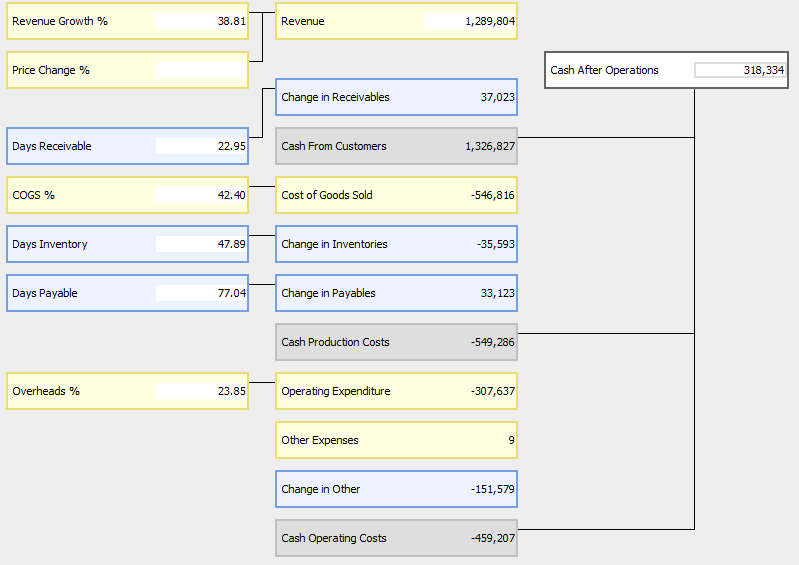
Figure1. Before cashflow management
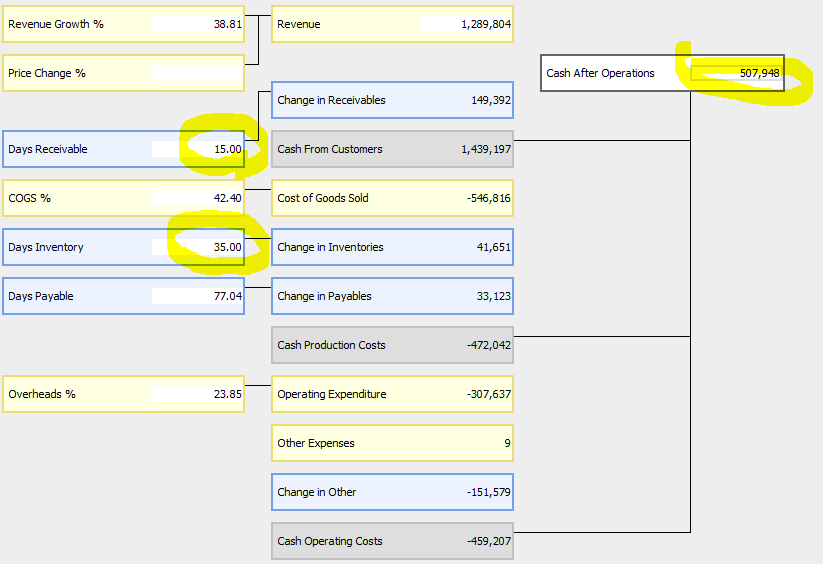
Figure2. After Cashflow Management
Capital expenditure
Where a business is reliant on having the most up to date technology in order to keep market share, then spending on capital expenditure can be a key driver of cashflow. Investing on R & D activities, purchasing production machinery are the examples.
Liquidity Management
The basic requirement of cashflow management is to preserve the liquidity of your business so that debts can be paid as and when they fall due. Therefore, there is a need to keep tight control on movement of cash and forecasting changes in cash availability. To achieve this goal, you need to prepare strategies to deal with any sudden, unexpected liquidity crisis. This includes regular cashflow monitoring through cash flow management plan and ensuring that you have access to finance in case of emergencies.
The cash management plan should cover all expected cashflows over a selected period. For most businesses, a cash management plan should be done at least once a month. With cashflow forecasting and variance analysis (the difference between forecast and actual) , you should have better management on your cashflow.