• Facebook
  • Twitter
  • Gplus
  • Linkedin
SYDNEY | MELBOURNE | BRISBANE | 1300 809 697
Accountants & Tax Advisers
  • Home
  • About Us
    • Who We Are
    • Vision
    • Careers at Quantum
  • Our Services
    • Business Services & Compliances
    • Business Setup & Closing
    • Outsourced CFO for International Companies
    • Taxation
    • Assurance & Advisory
    • Xero Accounting
    • R&D Tax Incentive and EMDG
    • International Trade & Transactions Support
    • Business Performance Review and Evaluation
    • E-Commerce Automation
    • Self Managed Super Fund (SMSF)
    • Tax Audit Guarantee Program
  • Industry
    • Childcare Services
    • Hospitality
    • Exporters
    • Construction & Building
    • Wholesale
    • Real Estate Agents
    • Information Technology
    • International Traders
    • Medical Practices
    • Legal Practices
  • Information Centre
    • Business News
    • Quantum Business & Tax Channel
  • Contact Us
  • Client Portal
Search
Menu
Simplified fuel tax credits — reduced record keeping

Simplified fuel tax credits — reduced record keeping

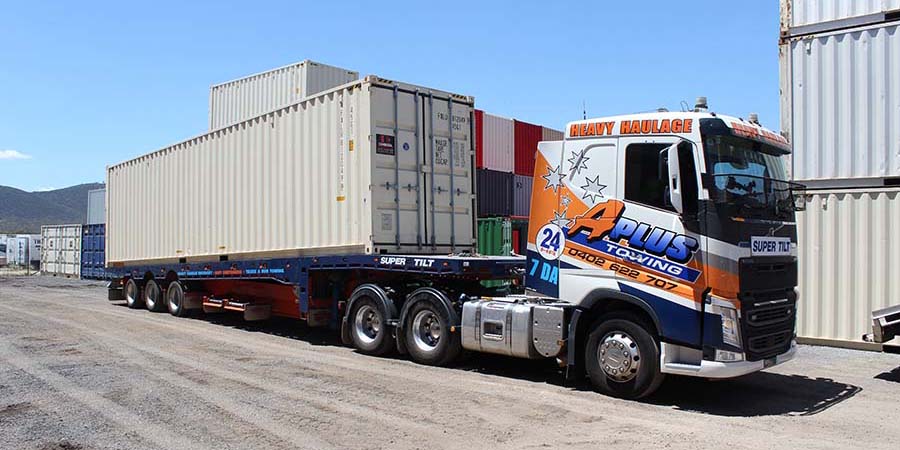
Coming into effect from 1 October 2020, the Commissioner of Taxation is allowing a simplified method for some claimants of fuel tax credits (FTC) on heavy vehicles.

This change is one of a few options now available for businesses looking to claim fuel tax credits without needing to keep excessive records. Previously, simplified methods have been made available for businesses who claim less than $10,000 in fuel tax credits per year. These include:

  • using one FTC rate for the entire BAS period
  • a basic method for calculating litres in a tax period
  • simplified record keeping, such as using bank statements (PCG 2016/2), and
  • using an ATO percentage to determine the litres used in auxiliary equipment (PCG 2016/11).

Basic method for heavy vehicles

The new basic method is only available for heavy vehicles that use diesel. Also, the vehicle must otherwise be eligible to claim fuel tax credits (iknow.cch.com.au/topic/tlp1001/overview/fuel-tax-credits).

Essentially, the ATO has provided a schedule of accepted diesel consumption rates in PCG 2021/2. The diesel consumption rate is mainly used to calculate an acceptable amount of diesel used based on kilometres driven.

To use the simplified method, an entity is required to substantiate the amount of litres acquired. This can be determined from fuel card statements or other acceptable methods.

Once all the information is available, the simplified method calculates an acceptable split between “public road usage” and “all other business uses”.

Steps in using basic method

  1. Calculate the litres of diesel used on public roads

Kilometres travelled on public roads × Diesel consumption rate

To calculate the kilometres travelled on public roads, the entity can calculate the actual number of kilometres or use a calculation provided by the ATO. The ATO calculation, known as the “derived number”, is the:

- total number of kilometres travelled × 98.4%.

Using the ATO calculation for derived kilometres, your client will only need to keep logbooks or odometer readings. Calculating based on actual public road usage requires detailed record keeping (such as GPS, other software, start and end destinations, times on road, etc).

As mentioned above, the diesel consumption rate is available at Schedule 1 of PCG 2021/2, and is calculated based on the gross vehicle mass of the truck.

  1. Calculate litres of diesel used off public roads

Total litres of diesel used — Litres of diesel used on public roads (from step 1)

The total litres of diesel used is generally available from tax invoices, receipts, fuel card statements, fuel supplier statements, bank statements, etc.

  1. Calculate the fuel tax credit for the tax period

The fuel tax credit is the addition of the following 2 calculations:

Litres of diesel used on public roads (step 1) × on public road rate, plus

Litres of diesel used off public roads (step 2) × all other business uses rate.

The current tax rates for FTC are here.

Client opportunities

If your client uses this basic method for heavy vehicles for a quarterly lodgment, they can only use this method. That is, an entity cannot claim the basic method as well as the auxiliary equipment method.

It may be beneficial to calculate which method your client should use each tax lodgment. A calculator has been prepared to assist you in making these calculations efficiently for clients.

Source: CCH iQ

February 22, 2021 / by Ben Youn
Share this entry
  • Share on Facebook
    Share on Facebook
  • Share on Twitter
    Share on Twitter
  • Share on Google+
    Share on Google+
  • Share on Linkedin
    Share on Linkedin
  • Share by Mail
    Share by Mail

RECENT ARTICLES

  • A new Property Tax coming for NSW A new Property Tax coming for NSW October 26, 2022
  • 2022 -2023 Labour Federal Budget 2022 -2023 Labour Federal Budget October 26, 2022
  • Electric vehicles to be exempt from FBT Electric vehicles to be exempt from FBT September 16, 2022

ARCHIVES

  • November 2012 (18)
  • May 2018 (8)
  • March 2020 (8)
  • May 2014 (3)
  • October 2017 (3)
  • May 2021 (3)
  • February 2022 (3)
  • October 2011 (2)
  • January 2012 (2)
  • April 2012 (2)
  • January 2013 (2)
  • April 2014 (2)
  • September 2016 (2)
  • January 2018 (2)
  • February 2018 (2)
  • June 2018 (2)
  • July 2018 (2)
  • September 2020 (2)
  • November 2020 (2)
  • December 2020 (2)
  • September 2022 (2)
  • October 2022 (2)
  • March 2012 (1)
  • October 2012 (1)
  • December 2012 (1)
  • June 2013 (1)
  • April 2016 (1)
  • August 2016 (1)
  • May 2017 (1)
  • June 2017 (1)
  • September 2017 (1)
  • August 2018 (1)
  • September 2018 (1)
  • April 2019 (1)
  • January 2020 (1)
  • April 2020 (1)
  • October 2020 (1)
  • February 2021 (1)
  • August 2021 (1)
  • October 2021 (1)
  • December 2021 (1)
  • March 2022 (1)
  • June 2022 (1)
See all
Corporate residency test to change for foreign companies
2021 - 2022 Federal Budget Highlights

OUR SERVICES

Business Services

Taxation

Assurance

Xero Accounting

Grant Consulting

USEFUL LINKS

ATO

ASIC

Business.gov.au

NSW Business

Business Victoria

Business Queensland

INFORMATION CENTRE

Articles

Taxation

Business News

Client Alert

Quantum News

Quantum TV

Seminar Silders

QUANTUM HOUSE AUSTRALIA

Phone : 1300 809 697

SYDNEY OFFICE
Level 8, 280 Pitt St, Sydney NSW 2000

MELBOURNE OFFICE
Level 24, 570 Bourke St, Melbourne VIC 3000

© Copyright 2010 - 2026 Quantum Business House Pty Ltd "Liability limited by a scheme approved under Professional Standards Legislation"
  • Facebook
  • Twitter
  • Gplus
  • Linkedin
Scroll to top